Offers
 Account
 Menu
Menu Favourite
 Basket



 Need Optical Advice?









 Updated on:
16 July, 2026
Updated on:
16 July, 2026



 Copy Link




Preservative-free eye drops are lubricating eye drops that do not contain preservatives. Preservatives are chemicals usually added to eye drops to prevent bacterial growth inside the bottle after it has been opened. While they help keep the product safe for longer use, they are not always suitable for everyone. Preservative-free eye drops are specially designed to avoid these chemicals, making them a safer and more suitable option for many users, even those with sensitive eyes.
- Preservative-free vs regular eye drops
- Types of preservative-free eye drops
- Who should use preservative-free eye drops?
- How do the preservative-free eye drops work?
- Side effects of preservative-free eye drops
- Steps to use eye drops properly
- How to store preservative-free eye drops?
- Frequently Asked Questions
Preservative-free vs regular eye drops
The primary difference between preservative-free and regular eye drops is their formulation. Regular eye drops contain preservatives to prevent bacterial growth, making them suitable to be used over a longer period after opening. In contrast, preservative-free lubricating eye drops do not contain these chemicals, making them gentler on the eyes. While both types can relieve dryness, preservative-free ones are often preferred for frequent or long-term use.
Types of preservative-free eye drops
Preservative-free eye drops are available in different packaging options to suit individual needs. Some are single-use vials, which are designed to be used once and then discarded, ensuring maximum hygiene.
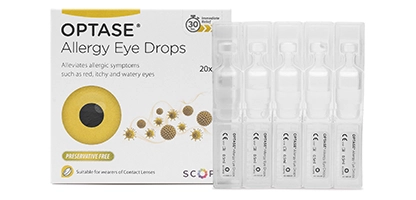
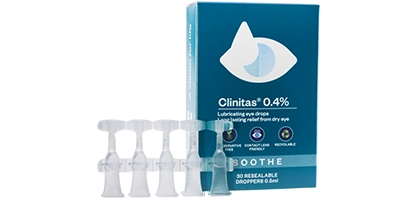
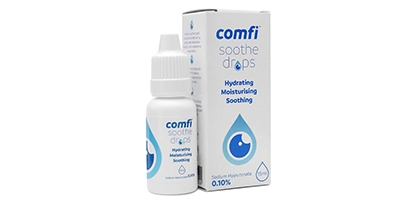
Others come in multi-dose bottles with special tips or valves to stop air or liquid from going back in, which helps prevent contamination without the need for preservatives.
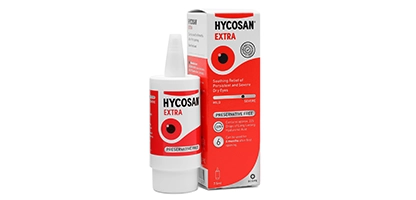
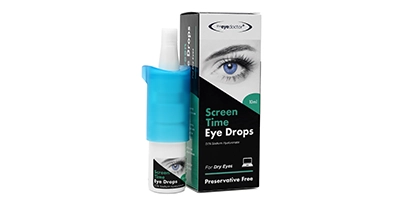
The drops also vary in thickness. Thinner drops give light hydration and are absorbed quickly, while thicker, gel-like drops stay in the eyes longer, giving longer-lasting relief to very dry or irritated eyes.
Who should use preservative-free eye drops?
Preservative-free eye drops are recommended for anyone looking for gentle and effective eye care. They are particularly useful for:
- Individuals with dry eye syndrome, in which the eyes do not produce enough tears or lose moisture too quickly
- Contact lens wearers, as preservatives in regular drops can cause irritation
- People recovering from eye surgery
- Those who spend long hours on digital devices, which can cause dry eyes
- Anyone with sensitive eyes who prefers preservative-free options for daily hydration
How do the preservative-free eye drops work?
Most preservative-free eye drops act as artificial tears, designed to mimic the natural tears produced by the eyes. These drops help lubricate the surface, reduce dryness and soothe irritation. They form a protective layer over the eye, which helps keep it moist and comfortable. This layer also supports the natural healing process of the ocular surface.
Side effects of preservative-free eye drops
Preservative-free eye drops are usually gentle on the eyes and suitable for most people. While most users do not experience any significant side effects, some people may experience temporary mild stinging or blurry vision immediately after use, which usually resolves quickly. If you experience continuous discomfort, redness in the eyes or changes in vision, it is important to seek advice from an optician without delay.
Steps to use eye drops properly
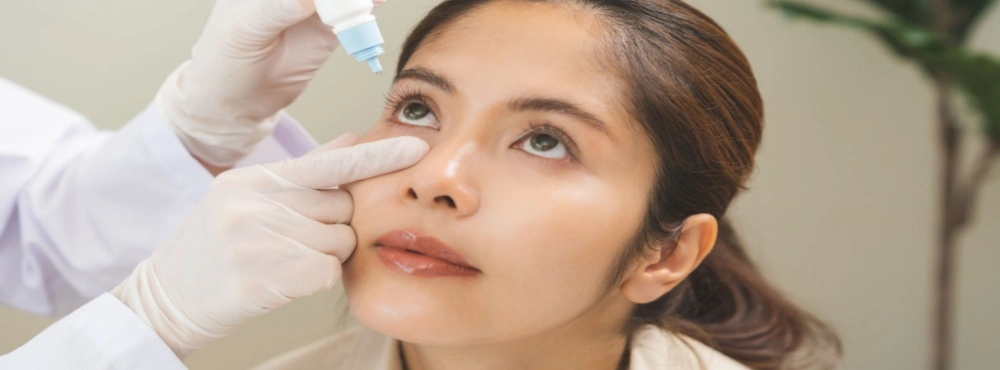
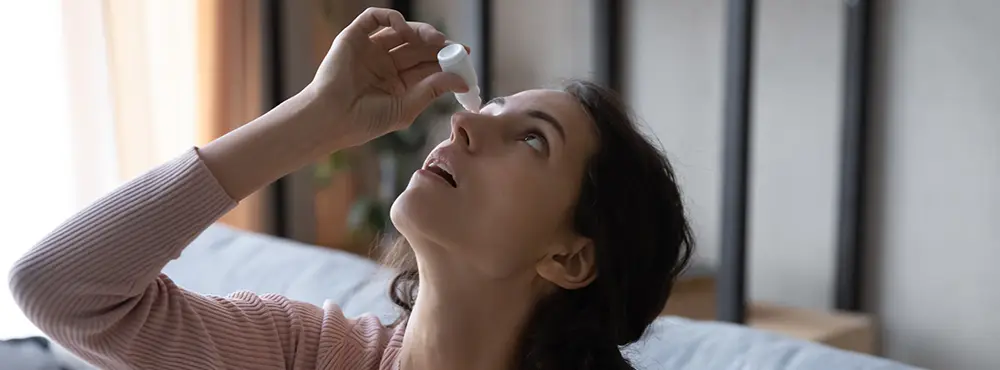
It’s important to use eye drops the right way for them to work on your eyes as intended.
Follow these steps:
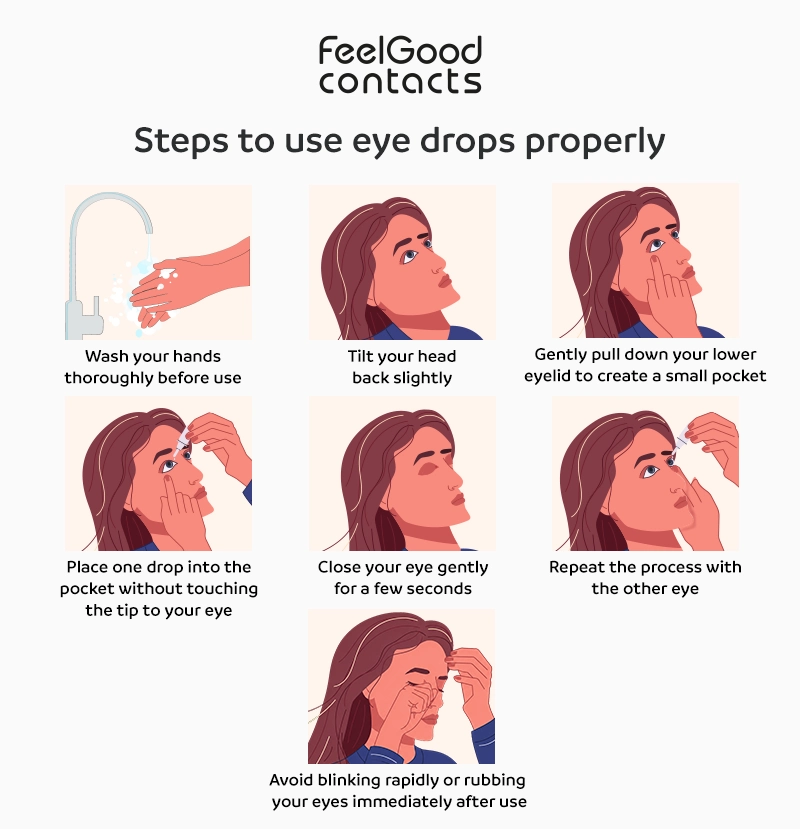
- Wash your hands thoroughly before use
- Tilt your head back slightly
- Gently pull down your lower eyelid to create a small pocket
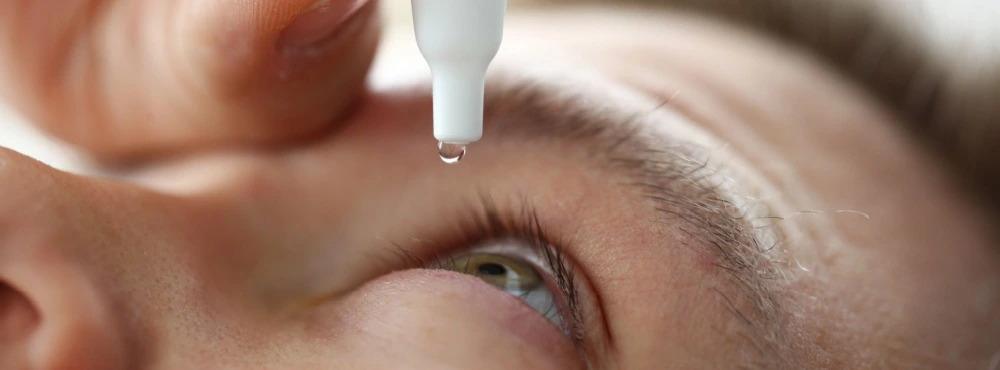
- Place one drop into the pocket without touching the tip to your eye
- Close your eye gently for a few seconds
- Repeat the process with the other eye
- Avoid blinking rapidly or rubbing your eyes immediately after use
How to store preservative-free eye drops?
Proper storage helps maintain the effectiveness of the eye drops. They should be kept in a cool, dry place away from direct sunlight. Single-use vials should be discarded after opening, even if some liquid remains. For multi-dose preservative-free bottles, it is important to follow the usage period mentioned on the label and not touch the tip to prevent contamination.
Frequently Asked Questions
Do preservative-free eye drops treat the cause of dry eyes?
No, preservative-free eye drops relieve dryness and irritation but do not treat the underlying cause.
Do preservative-free eye drops have an expiry date?
Yes, all types of eye drops come with an expiry date, including preservative-free ones.
How often can preservative-free eye drops be used?
The number of times you can use preservative-free eye drops depends on several factors, such as the severity of your eye condition, the type of eye drops you are using and your daily lifestyle, like screen time usage or whether you’re a contact lens wearer. Always check the instructions on the packaging or you can also consult an eye care professional for guidance.
When should you use preservative-free eye drops?
Preservative-free eye drops should be used whenever your eyes feel dry, tired or irritated, which is often after long screen time, exposure to air conditioning or during recovery from eye procedures.
In addition to using eye drops, some simple daily habits can also help maintain eye comfort. Taking regular breaks from screens, following the 20-20-20 rule and blinking often while using screens can reduce dryness. Staying hydrated and maintaining a balanced diet also supports eye health. Wearing protective eyewear in dusty or windy conditions can further help reduce irritation.