Offers
 Account
 Menu
Menu Favourite
 Basket



 Need Optical Advice?









 Updated on:
21 May, 2026
Updated on:
21 May, 2026



 Copy Link



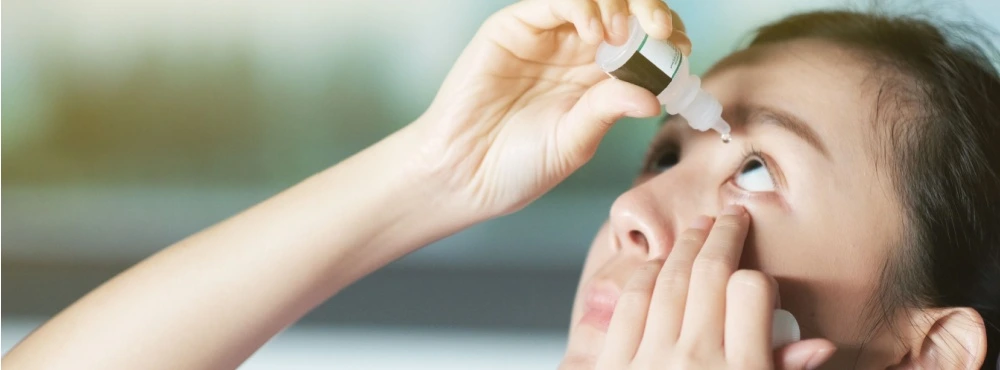
Artificial tears are specially formulated eye drops designed to mimic the composition of natural tears. They help relieve symptoms associated with dry eyes, a condition that affects many people worldwide. Dry eyes can be due to various factors, such as prolonged exposure to screens, environmental conditions, ageing, medical conditions or medication side effects.
- What are artificial tears?
- Different types of artificial tears
- Benefits of artificial tears
- How to use artificial tears safely?
- Frequently asked questions
What are artificial tears?
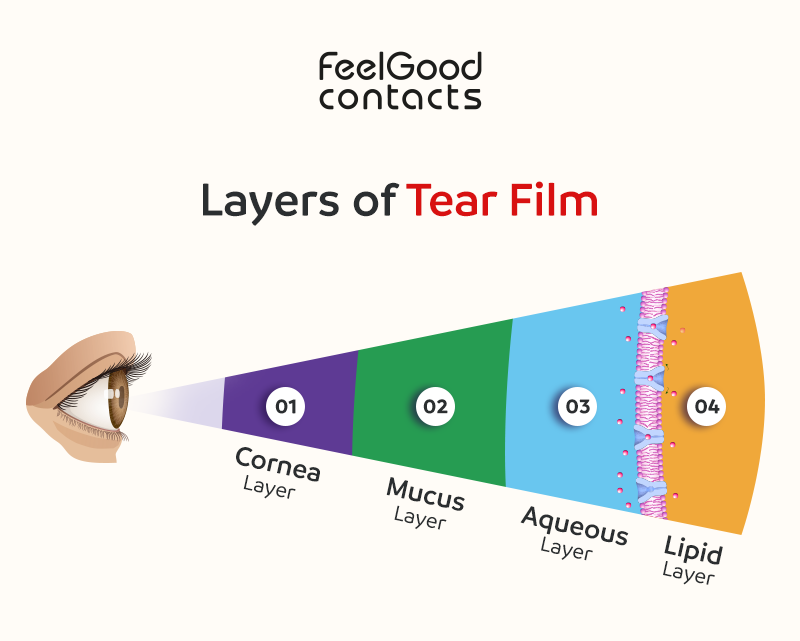
Artificial tears are solutions comprised of water, electrolytes and lubricants. These ingredients help support the tear film which consists of three layers: oil, water and mucus layer. They also help maintain the health of the ocular surface. Unlike prescription eye drops, they are available over the counter, making them easily accessible to those in need of quick relief from dry eye symptoms.
Different types of artificial tears
Artificial tears come in various formulations, each designed to address specific aspects of tear film dysfunction. An individual can choose the appropriate product as per their symptoms.
1. Preservative-free vs preservative-containing
- Preservative-free eye drops: These are ideal for individuals with sensitive eyes or those who use eye drops frequently. Preservatives can cause irritation if used repeatedly.
- Preservative-containing eye drops: These eye drops are suitable for occasional use as they contain preservatives that help extend the shelf life of these eye drops.
2. Viscosity levels
- Low-viscosity drops: These eye drops have a light, tear-like consistency and spread easily over the eye surface. They provide quick relief but may need more frequent applications.
- High-viscosity drops: Offering long-lasting relief, these eye drops can be thicker and may slightly blur vision temporarily after application.
3. Specialised formulations
Some eye drops are designed with specific ingredients to target particular symptoms:
- Lipid-based drops: These eye drops are designed for people with meibomian gland dysfunction (MGD), a condition affecting the oil layer of the tear film leading to tears evaporating too quickly. They help restore the lipid layer and reduce tear evaporation.
- Electrolyte-enhanced drops: These eye drops contain important minerals that help keep the eye’s surface healthy and properly balanced.
4. Eye gels and ointments
Eye gels and ointments are thicker formulations often designed for overnight use. They provide prolonged lubrication, making them ideal for severe dry eye symptoms. Their thicker consistency may cause temporary blurring, but the benefits extend through the night.
Benefits of artificial tears
Artificial tears offer numerous benefits and help maintain ocular comfort and health. The following are some key benefits:
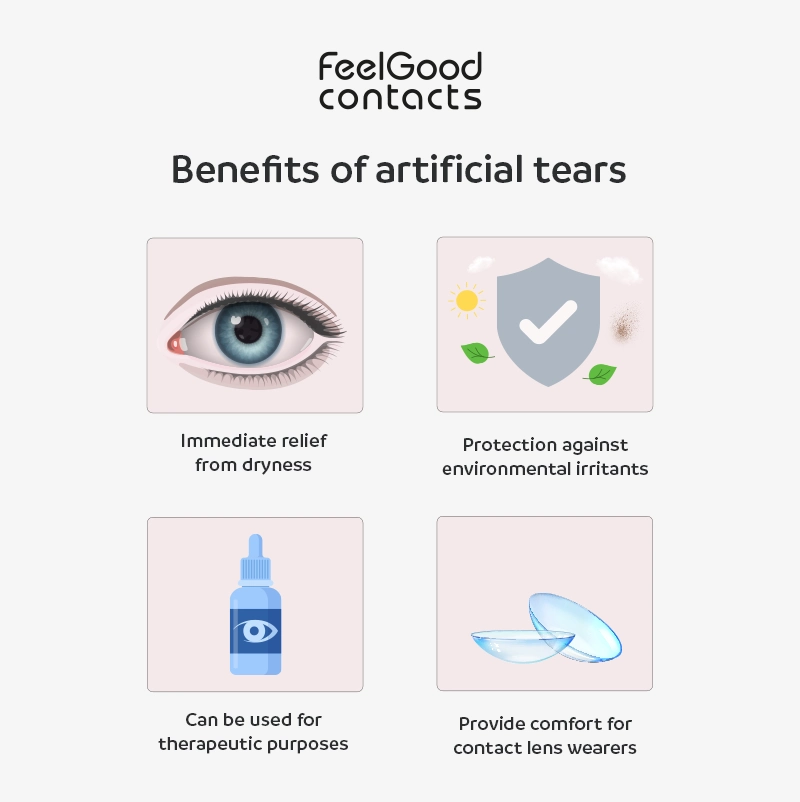
1. Immediate relief from dryness
One of the primary benefits of artificial tears eye drops is their ability to provide quick relief from dryness and irritation. Most users feel relief within minutes of application.
2. Protection against environmental irritants
These eye drops form a lubricating layerover the eye's surface, shielding it from smoke, wind and other environmental irritants that can worsen dryness.
3. Can be used for therapeutic purposes
Artificial tears can be used to manage dry eyes and minor surface damage but are not a suitable for treatment for eye injuries, inflammation or infections.
4. Provide comfort for contact lens wearers
Some artificial eye drops are designed for use with contact lenses and can help reduce dryness and improve comfort while wearing lenses.
How to use artificial tears safely?
It’s important to use the artificial tear drops properly to ensure their effectiveness and reduce the risk of potential side effects. Here are some tips on proper and safe usage:
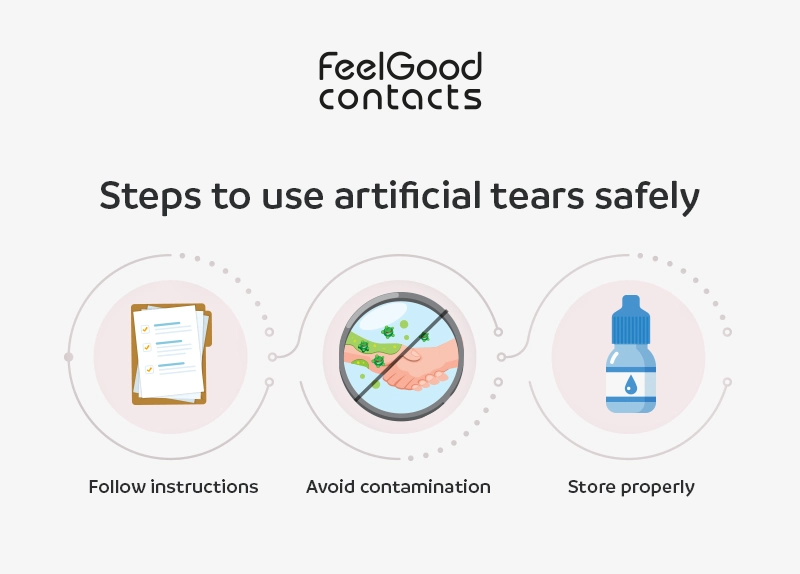
1. Follow instructions
Always follow the instructions provided on the product label. This includes the recommended dosage and frequency of application.
2. Avoid contamination
To prevent contamination, do not let the tip of the dropper touch any surface, including your eye. Always wash and dry your hands before application.
3. Store properly
Make sure eye drops are stored as per the instructions on the label, typically in a cool, dry place. Once opened, single-use preservative-free drops should be thrown away after one use, while multi-dose bottles can be used for a set period after opening, as per recommendations on the label.
Frequently asked questions
Are artificial tears safe?
Yes, artificial tears are generally safe for most people, as they help. Although they can be used regularly, it’s advised to consult a healthcare professional if symptoms persist.
When and for what conditions should artificial tears be used?
They should be used to relieve symptoms of dry eyes caused by ageing, prolonged screen use, environmental factors, wearing contact lenses, allergies or mild eye irritation.
How often should you use artificial tear eye drops?
You can use these eye drops as directed on the packaging or consult an eye care professional to ensure their safe and effective use.
Although these eye drops are generally safe, it’s best to consult an eye care professional for advice specific to your condition. They can give recommendations based on the severity of your symptoms and any underlying medical issues.