Offers
 Account
 Menu
Menu Favorite
 Basket



 Need Optical Advice?








 Updated on:
24 June, 2026
Updated on:
24 June, 2026



 Copy Link



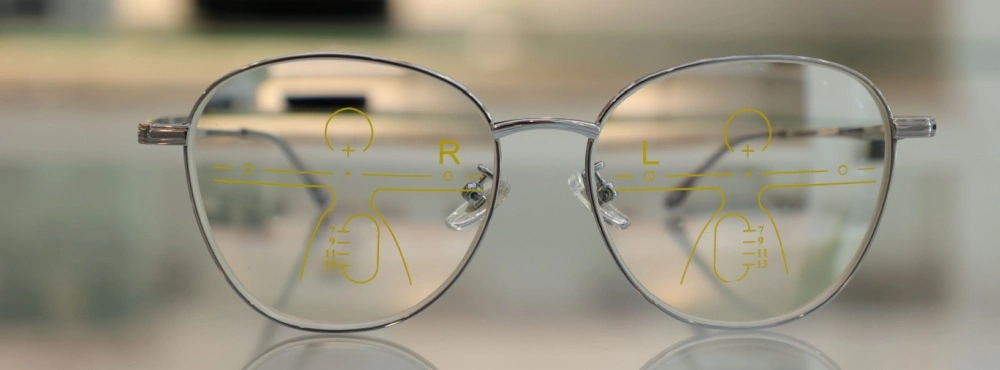
Glasses are a common and effective way to correct vision. They help those with a prescription to see clearly by adjusting how light enters the eyes. While they may appear simple, glasses are carefully designed devices comprising several important parts. Each part of the frame plays a specific role in providing a clear vision and a comfortable and secure fit.
Different parts of prescription glasses
The different parts of the glasses frames are as follows:
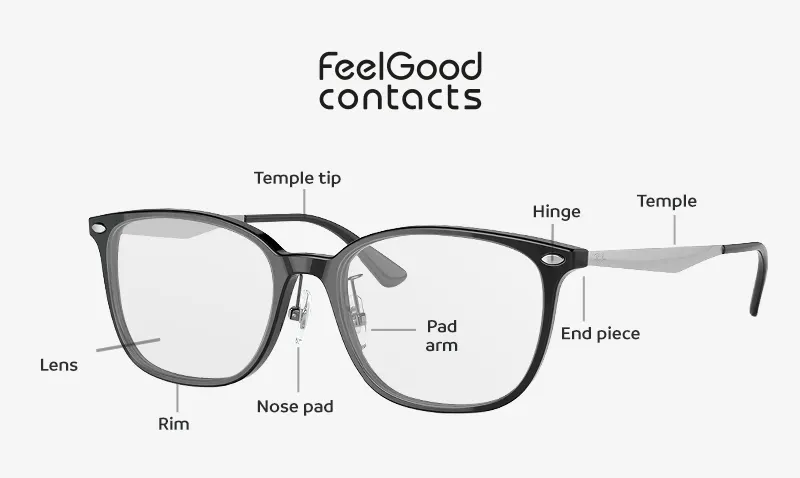
1. Lenses
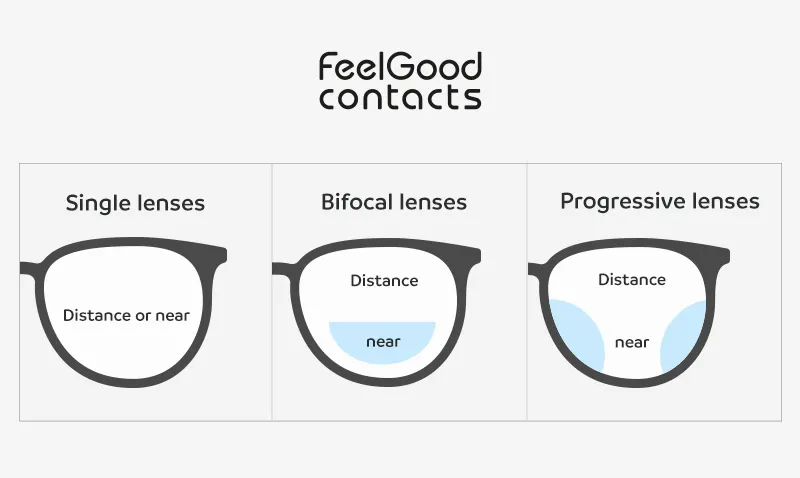
Lenses are the part of the glasses that sit in front of the eyes and help correct vision. They are customised according to an individual’s prescription to ensure light focuses correctly on the retina. There are different types of lenses, depending on the prescription need:
-
Single vision lenses
These lenses are used to correct vision for one specific distance, either distance, intermediate or near.
-
Bifocal lenses
These lenses contain two distinct sections within one lens, allowing you to see clearly at both distance and near without switching between glasses.
-
Multifocal lenses
Also referred to as varifocal lenses, these lenses allow you to see clearly at more than one distance. within the same lens.
Lenses can also have special coatings, such as:
✔ Anti-reflective coating to reduce glare and enhance visual clarity
✔ UVA and UVB protection to block harmful ultraviolet rays
✔ Scratch-resistant coating for increased durability, as it helps prevent surface damage.
✔ Blue light coating to filter out harmful blue light rays emitted from digital screens, potentially reducing digital eye strain.
2. Rim
The rim is the part of the frame that surrounds the lenses. It holds the lenses securely and determines the overall shape and structure of the glasses. There are three main types of rims:
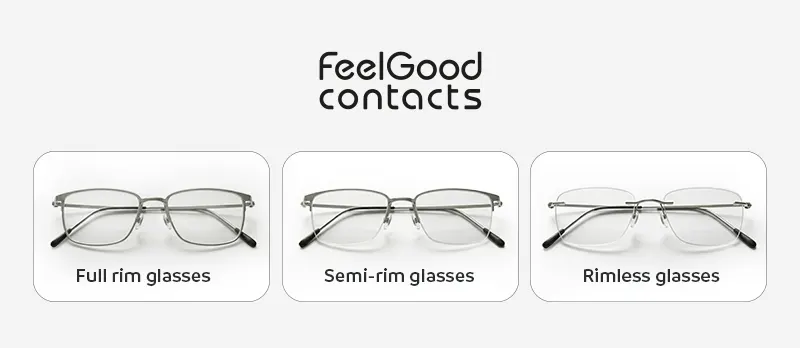
Full-rim frames
These frames have a complete border that fully encloses the lenses, holding them firmly in place. This design offers the highest level of support and durability.
Semi-rimless frames
These frames have a border that covers only a part of the lenses, usually along the top or bottom edge. This type of rim makes frames lighter while keeping the lenses secure.
Rimless frames
These frames do not have a surrounding border and the lenses are attached directly to the bridge and arms. This rim makes frames very light and offers a minimal look.
Rims come in different sizes and shapes, such as round, square and rectangular. An individual should always choose a frame with a shape and size that best suits their face, ensuring the lenses are correctly positioned for clear vision.
These rims can be crafted from different materials, such as acetate, plastic, metal and eco-friendly. Each type offers a unique balance of durability, weight and appearance.
3. Nose bridge
The bridge connects the two lenses and rests on the nose. It helps distribute the weight of the glasses evenly. A well-fitted nose bridge is important for comfort and proper positioning. If the bridge is too tight, it may cause pressure on the nose and if it is too loose, the glasses may keep sliding down. There are different types of bridges, including:
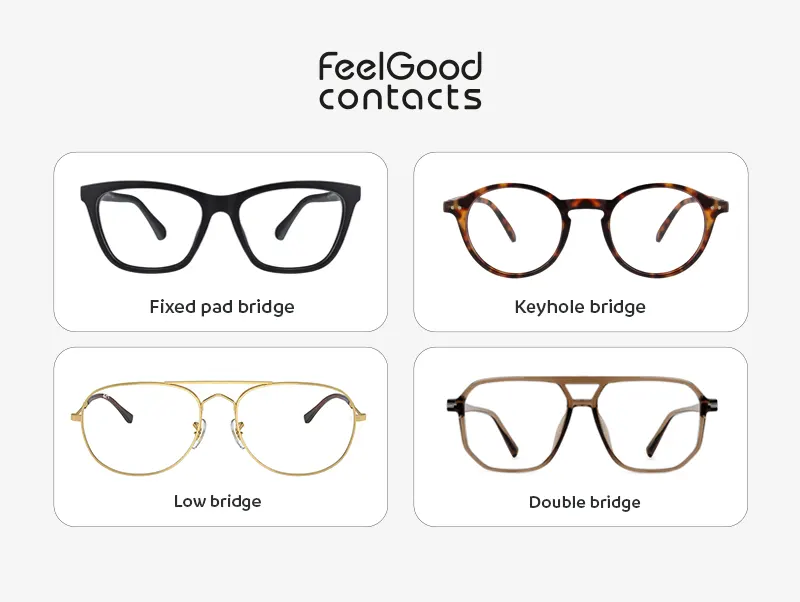
Fixed pad bridge
It sits directly on the nose and spreads the weight evenly. This type of bridge is very common in plastic and acetate frames.
Keyhole bridge
It’s shaped like a keyhole and rests lightly on the sides of the nose rather than the top, making it a great choice for comfort.
Low bridge
It is designed for people with higher cheekbones to help prevent frames from slipping.
Double bridge
It has an extra bar across the top for added support and style and is often seen in aviator style frames.
Khuram Sarwar, Dispensing Optician at Feel Good Contacts, says, “The bridge plays a key role in determining how glasses sit on the face. If it is not a correct fit, it can affect both comfort and how well the lenses align with the eyes.”
You may also Like:



4. Nose pads
Nose pads are small components in the middle of the nose bridge and the rim. As they sit on both sides of the nose, they reduce the pressure and improve the comfort. Acetate and plastic frames do not have nose pads by default. Some plastic styles can have adjustable nose pads. While, metal frames always come with adjustable nose pads, usually made from soft silicone. Their purpose is to keep the glasses stable and prevent them from slipping.
5. Pad arms
Pad arms are small metal extensions attached to the frame that hold the nose pads in place. They allow the glasses to be positioned correctly on the nose for a more secure and comfortable fit. Pad arms are primarily found in frames crafted from metal, where they help position the glasses comfortably and securely on the nose.
6. Temples (arms)
Temples, also known as arms or sides, are the long sides of the glasses that extend from the frame to the ears. They help keep the glasses in place and are designed to sit comfortably over the ears, holding the frame steady during movement.
Two different designs of temples are:
Straight temples
These temples run straight along the sides without much curve, giving the glasses a neat and simple appearance.
Curved temples
These temples are curved around the ears, providing a more secure and stable fit. They are especially useful for those with an active lifestyle.
7. Hinges
Hinges connect the temples to the front of the frame. They allow the arms to open and close smoothly. High-quality hinges are important for durability. Premium glasses feature spring hinges, which allow the arms to flex slightly outward. They make the glasses more comfortable to wear and reduce the risk of damage.
8. End tips
End tips are the ends of the temples that rest behind the ears. They are designed to sit comfortably behind the ears and help keep the glasses secure during wear. Their role is to prevent the glasses from slipping off. Properly fitted temple tips ensure that the glasses stay in place throughout wear.
9. Screws
Screws are small components that hold the hinges together, allowing the temples to open and close securely. They can be adjusted or replaced if the frame becomes loose or unstable.
10. Rivets and embellishments
Rivets are tiny metal fittings found near hinges and help fasten them securely to the frame. Embellishments, on the other hand, are decorative elements featured on the frame, such as metal detailing or stones that enhance the appearance of the glasses.
Knowing each part of glasses can help you make a more informed choice when selecting a pair and ensure a better wearing experience.