Offers
 Account
 Menu
Menu Favourite
 Basket



 Need Optical Advice?







 Updated on:
27 January, 2026
Updated on:
27 January, 2026


 Copy Link



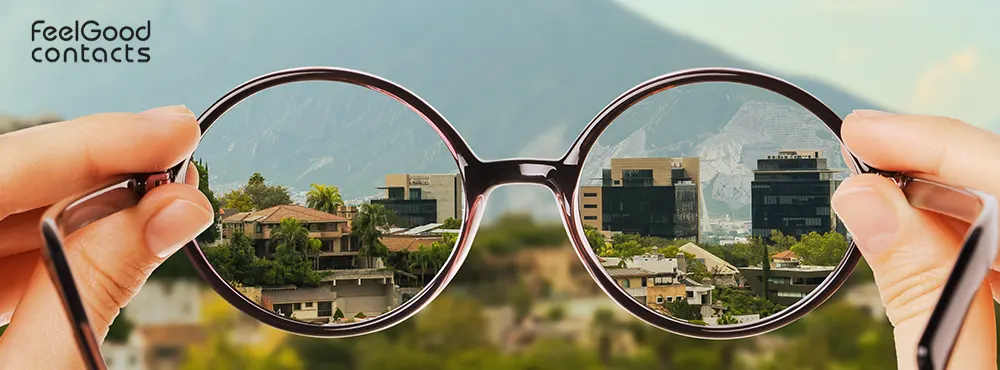
In today’s fast-paced digital world, our eyes are constantly working overtime. From scrolling through our phones and staring at computer screens to driving for long hours, we put our eyes under significant digital strain and discomfort every day.
With all this strain, your eye health can deteriorate over time. You might find yourself squinting at a text message on your phone, noticing objects are blurry, or unable to read the fine print. You might also experience symptoms like double vision or headaches.
In such cases, you will ask yourself, “Do I need glasses?” In this article, you’ll get the answer to this question. Below are the top 5 signs you might need glasses or contact lenses. These early signs will help you identify any underlying vision problem.
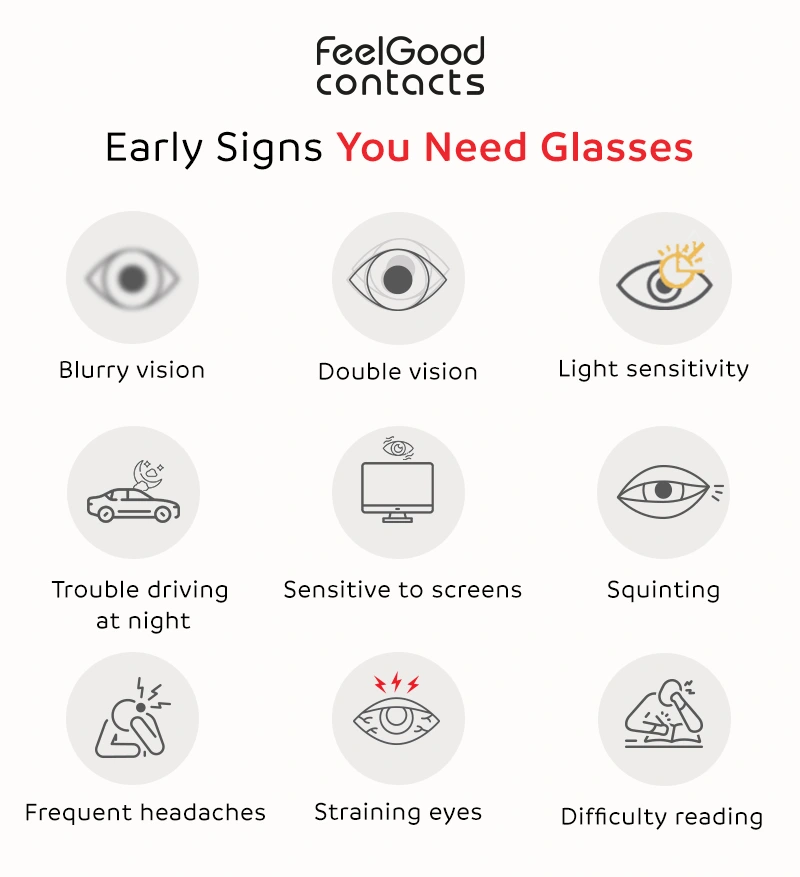
- Blurry close-up or distant vision
- Double vision
- Difficulty adjusting to light changes
- Squinting
- Frequent eye strain and headaches
1. Blurry close-up or distant vision
Do you find it difficult to focus on close-up vision tasks like sewing or reading books, menus, or text messages on your phone without holding them slightly away? Or do you struggle to see people and objects at a distance clearly, for instance, reading billboards and street signs? These are the most apparent warning signs of needing glasses for vision correction.
Blurry vision is the inability to see or focus on nearby or distant objects. Healthy eyes refract light through the cornea and focus it on a single point on the retina. These signals are then sent through the optic nerve to the brain, where the signals are interpreted into an image. A refractive error is the most common cause of blurry vision. This includes nearsightedness (myopia), farsightedness (hyperopia), presbyopia or astigmatism.
According to Johns Hopkins Medicine, a refractive error can occur when the lens in the eye prevents the light from focusing directly onto the retina, resulting in blurred or distorted vision, among other symptoms. These can be corrected with prescription glasses or contact lenses. A professional eye exam will help you determine the right prescription for your eyes.
2. Double vision
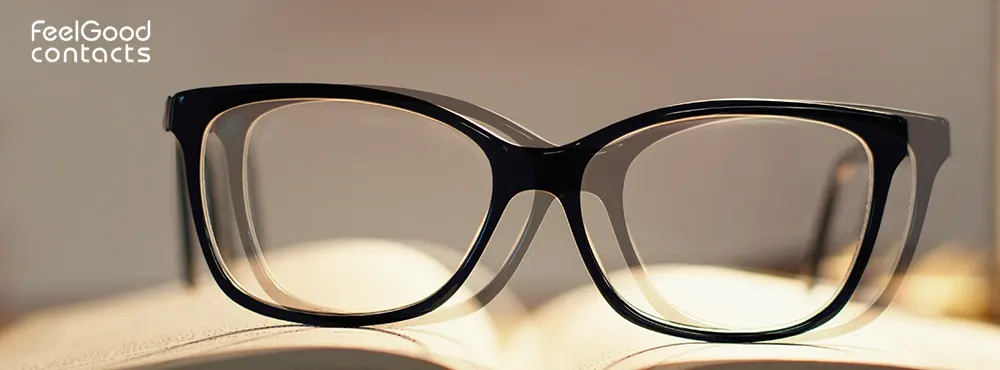
Your retina converts light into electrical signals, which are transmitted through the optic nerve and sent to your brain to build a single image that you see. When you have double vision, you see duplicate or overlapping images instead of one image.
For instance, you see two screens when you look at a computer or two clocks when you look at your watch. This can be due to complications of the ocular muscles and nerves that connect the eyes to the brain, causing a misalignment that prevents the creation of a single image. This indicates a refractive error like astigmatism - one of the biggest signs you need glasses. Glasses can be prescribed with a prism in the lens to help the eyes work together to produce a single image.
However, seeing duplicate images can also indicate other eye conditions, such as cataracts and dry eyes as well as other health conditions, including migraines, diabetes, myasthenia gravis (a chronic autoimmune disorder), multiple sclerosis, brain tumour or an aneurysm.
3. Difficulty adjusting to different light settings

Healthy eyes easily adapt to different lighting environments. However, our eyes’ ability to transition from light to dark gradually reduces with age. Poor night-time vision can also indicate presbyopia, eye strain, an underlying eye condition like cataracts, night blindness, eye muscle stiffness or weakness in the eye tissues, or that you need glasses.
These conditions can significantly impact your quality of life and everyday safety, as it becomes difficult to see in dimly lit environments or avoid glare from lights. For instance, you might struggle to drive well at night, navigate your way to the bathroom or identify objects, licence plates and street signs in the dark. Moreover, you can see glare or halos when looking at a computer screen, streetlights or oncoming headlights.
Glasses that correct vision can help reduce visual discomfort across different lighting conditions, particularly in low-light settings.
4. Squinting
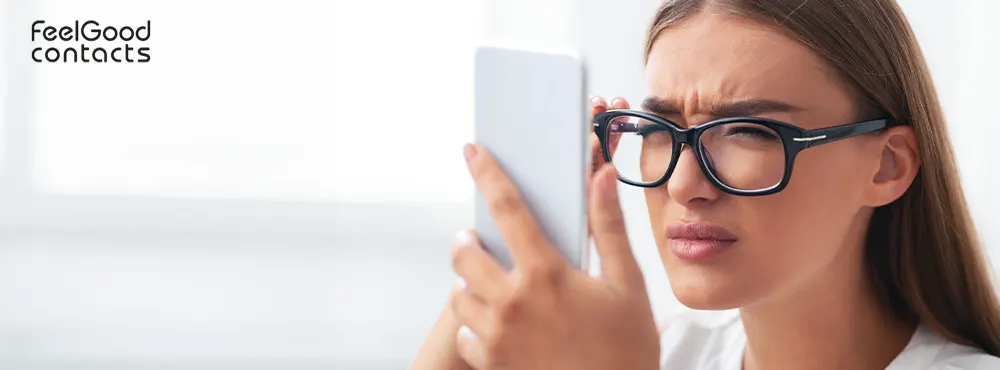
Squinting (partially closing your eyes) is a natural reflex that helps improve your focus and vision clarity by filtering the amount of light entering your eyes. For instance, you narrow your eyes and stare at the computer screen to focus. However, if you constantly squint to see things clearly, it is most likely a refractive error and a tell-tale sign that you need glasses.
5. Frequent eye strain and headaches
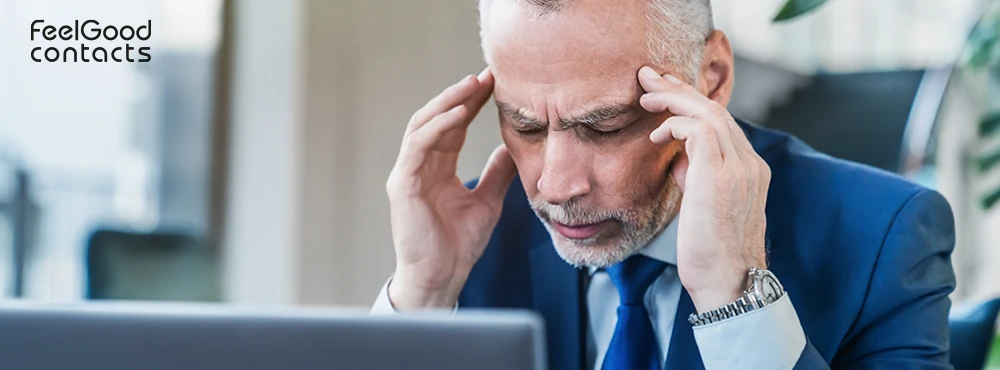
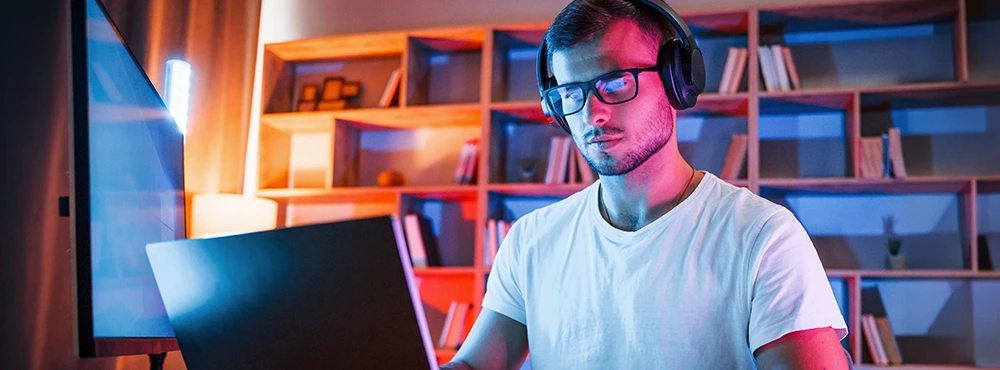
Recurring headaches, pulsing or pounding sensations inside your head, or tension around your temples can be symptoms of eye strain and a sign that you need glasses, particularly when you experience them after using screens, reading or focusing on a task.
This may happen when your eyes are unable to focus properly and you force them to work harder to compensate for unclear or blurry vision, which can lead to excessive strain, persistent headaches and eye fatigue.
An eye test can help you address the root cause early and rule out any uncorrected vision problems or refractive errors, thus restoring productivity and comfort and improving your overall quality of life. However, recurring headaches can also point to many other causes unrelated to eyesight. If your eye exam comes back normal and you continue to experience the above symptoms, it’s best to consult a health specialist as soon as possible.
Krina Halai, in-house optician at Feel Good Contacts, says, “For regular screen users, frequent eye strain and headaches can indicate that they’re not taking enough breaks. To alleviate these symptoms, they can follow the 20:20:20 rule. According to this rule, every 20 minutes, you need to focus your eyes on an object located about 20 feet away for 20 seconds. Moreover, they can adjust their screen brightness or opt for blue light glasses.”
These five signs of needing glasses will help you take the correct course of action to ensure good eye health and clear vision. Keep in mind that even if you experience one or more of these signs, it does not necessarily mean that you need glasses.
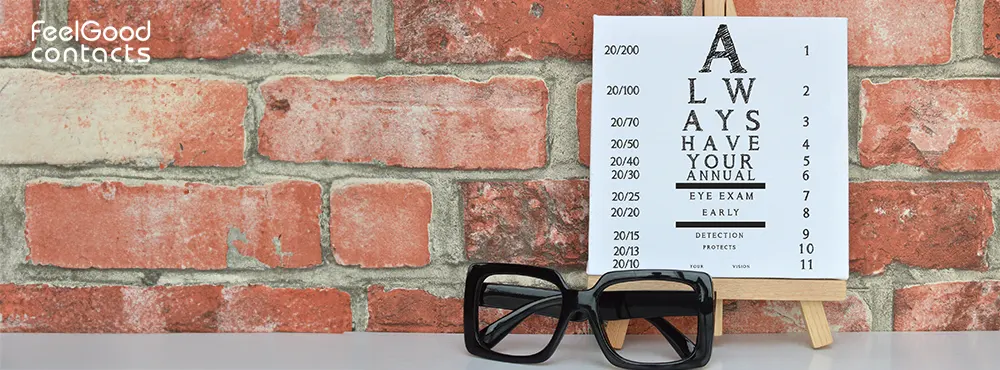
However, you must schedule an appointment with your local optician to have your eyes tested with an optometrist and glasses dispensed by an optician. This will help detect potential eye conditions early, get the best possible solutions and care, prevent your vision from worsening and support long-term eye health.