Offers
 Account
 Menu
Menu Favourite
 Basket



 Need Optical Advice?









 Updated on:
02 July, 2026
Updated on:
02 July, 2026


 Copy Link



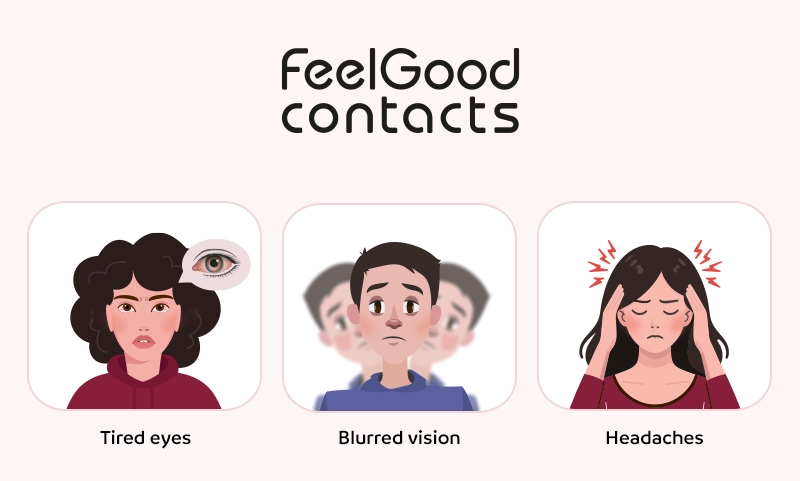
Eye strain, also known as asthenopia or eye fatigue, is a common condition that occurs when your eyes become extremely tired from focusing on something for a long time. This usually happens while reading, using digital devices (such as smartphones, laptops and tablets) for a prolonged period or driving long distances.
Even though eye strain can be unpleasant and cause discomfort, it is not serious and does not cause permanent eye damage. Its symptoms usually go away once you rest your eyes or take steps to relieve eye discomfort. Sometimes, eye strain symptoms can also indicate an underlying eye condition. An eye test can help detect and manage such conditions early.
Types of eye strain
Eye strain can be temporary or persistent. Temporary eye strain is when you feel your eyes are tired occasionally, like after a long day at work. On the other hand, persistent eye strain is when your eyes feel tired constantly.
Nowadays, digital eye strain, or computer vision syndrome (CVS), is quite common due to prolonged device use. This happens when your eye muscles work for long hours without regular breaks, causing visual fatigue and making your eyes feel tired.
Eye strain symptoms
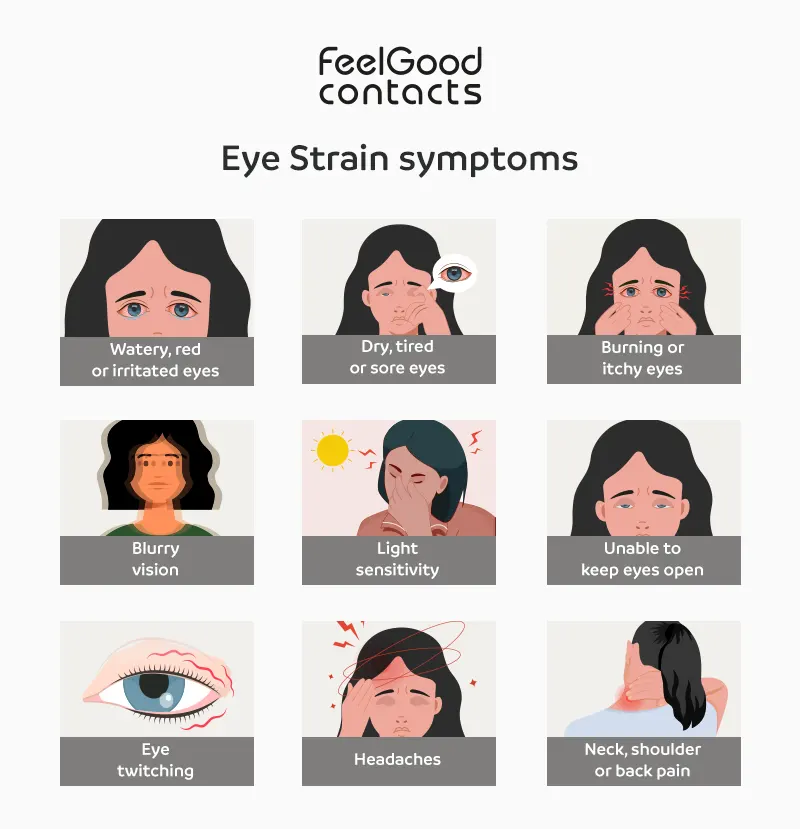
Some common signs of eye strain are:
- Tired, sore or itchy eyes
- Burning eyes
- Red eyes
- Dry eyes
- Watery eyes
- Difficulty keeping your eyes open
- Blurred or double vision
- Increased sensitivity to light (photophobia)
- Eye discomfort
- Twitching eyelids
- Eye strain headaches
- Difficulty concentrating
- Pain in the neck, shoulders or back
Eye strain causes
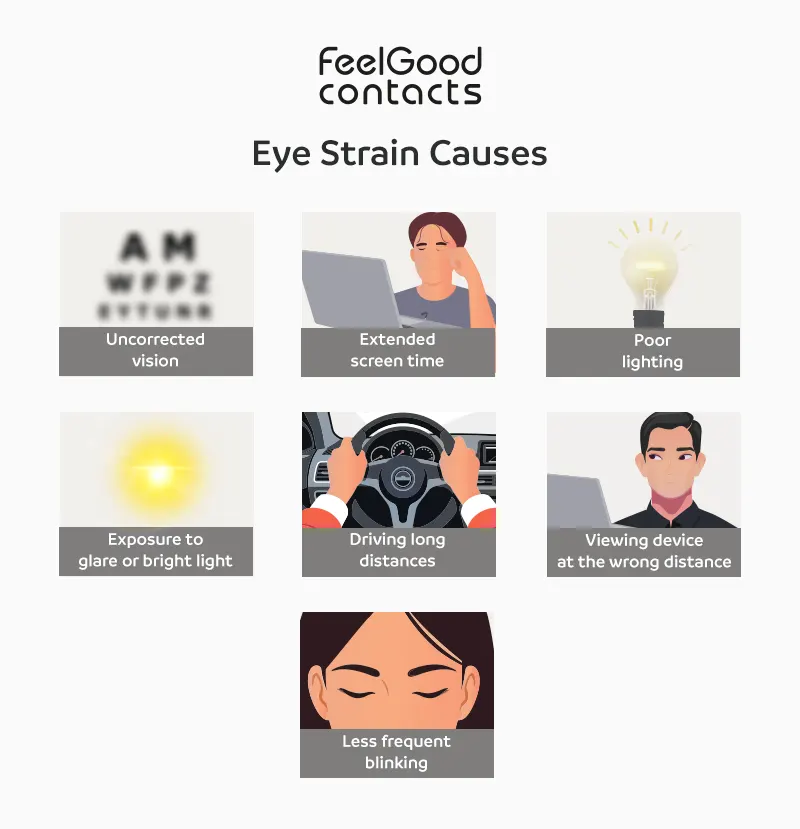
Eye strain is often caused by:
- Staring at digital screens (like computers or mobile phones) for a prolonged period
- Driving long distances
- Doing activities that need deep focus for a long time without resting your eyes, like reading, crafting, sewing and writing
- Playing video games
- Working in very dim light
- Uncorrected refractive errors (like nearsightedness or farsightedness) or an underlying eye condition, such as dry eyes or eye muscle imbalance
- Exposure to glare or bright light
- Not blinking enough
- Being tired or stressed
- Being exposed to dry moving air from an air conditioner, heater or fan
Eye strain management and prevention
Eye strain can make it difficult for you to focus on a task. Simple changes in your daily habits and environment can help relieve it.
Tina Patel, a Contact Lens Optician at Feel Good Contacts, suggests the following lifestyle and home remedies to prevent and reduce eye strain:
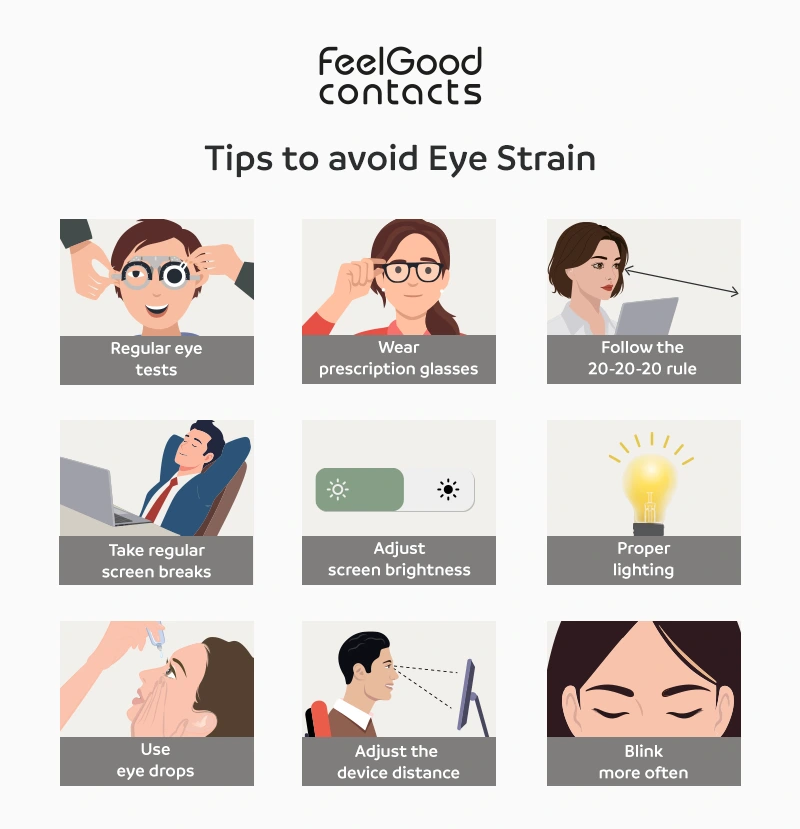
1. Limit your screen time
In today’s world, it’s difficult to completely avoid digital devices such as computers, laptops and smartphones. However, you can try to reduce the time you spend using these digital devices. You can also set the display brightness to a level that’s conducive to reading and matches the lighting around you. Position mobile screens slightly farther away from you and place desktop screens at or slightly below eye level.
2. Take regular breaks
When driving or working on close-up tasks like reading and writing, take regular breaks and rest your eyes by focusing on objects at different distances. You can follow the 20-20-20 rule, according to which, you need to take a 20-second break every 20 minutes to view something 20 feet away. This can help reduce eye fatigue and digital eye strain. It’s also important to blink regularly, especially when using a screen.
3. Work in proper lighting
You should adjust the lighting as per the activity you’re doing. When working on close-up tasks, ensure your work area is well-lit. When you’re reading or working at a desk, use a shaded light in front of you so that the light does not shine directly into your eyes. When watching television, the lighting can be soft and warm, creating a cosy and relaxing atmosphere.
4. Choose the right eyewear
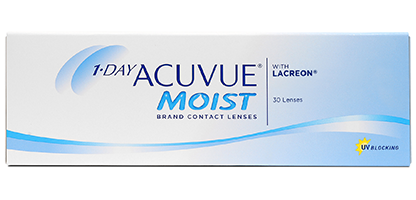
Those who need vision correction should wear their prescription glasses or contact lenses regularly. Additionally, some people find blue light glasses beneficial when using digital devices, whether they have a glasses prescription or not. You can also ask your optometrist about the different lens coatings and customisation options that might further help you.
5. Use artificial tears
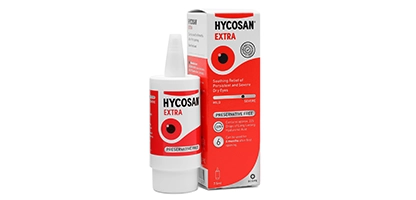
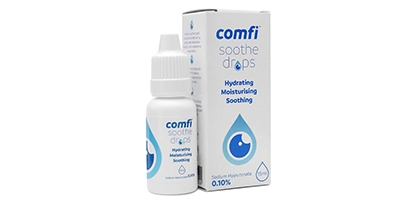
Using lubricating eye drops, such as comfi Soothe Drops, can help hydrate the eyes and prevent dryness. Preservative-free eye drops, such as Hycosan Extra, can be used multiple times a day to relieve eye strain even if you don’t have dry eyes. Always consult an eye care specialist if you are looking for eye drops for a specific concern.
6. Check the air quality
You can also prevent dry eyes with other small steps, such as using a humidifier, adjusting the thermostat to reduce airflow, avoiding smoke and adjusting your car’s heater. Ensure that the dry moving air isn’t blowing directly into your face and eyes.
7. Take regular eye exams
Regular eye tests can help maintain clear vision as well as good eye health. An optometrist can also help detect and manage any underlying eye condition associated with eye strain early.