Offers
 Account
 Menu
Menu Favourite
 Basket



 Need Optical Advice?









 Updated on:
02 February, 2026
Updated on:
02 February, 2026



 Copy Link



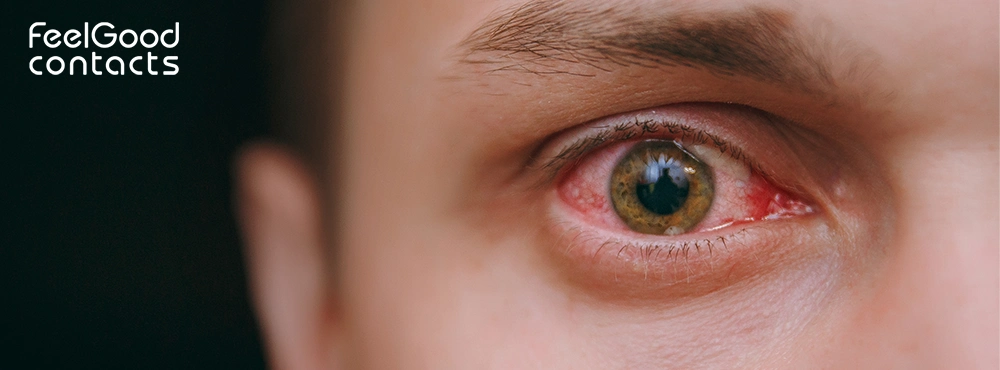
Red eyes or bloodshot eyes refer to a condition where the whites of the eye (sclera) appear pink or red. It occurs when the tiny blood vessels present on the eye surface become inflamed or irritated.
Red eyes are usually caused by factors like lifestyle, environment or minor health issues. In many cases, they may not be a concern. However, if they persist for a longer period and are accompanied by severe pain in the eyes, it is a matter of concern. In such cases, you should visit your optician or healthcare provider right away. To understand why red eyes occur, let’s learn about what causes them.
What causes red eyes?
Many cases of red eyes are usually caused by minor issues such as allergens or dry eyes. However, in cases where red eyes are causing you pain, changes in vision or light sensitivity may be due to a serious condition.
Common red eye causes include:
- Allergens like pollen, pet dander or dust can cause red, itchy eyes
- Reduced tear production can cause dry, irritated and red eyes
- Insufficient sleep can lead to increased eye strain and disrupt the tear film, resulting in red eyes
- Poor contact lens hygiene can irritate the eyes and cause redness
- Prolonged screen time can lead to eye strain and redness
- Minor injuries such as accidently scratching your eye can lead to irritation and redness
Serious red eye causes:
Red eyes are usually not a serious concern but if the signs and symptoms point to a more serious condition, you should see an optician or healthcare provider. Here are some serious red eye causes:
- Conjunctivitis (pink eye): A common eye infection that leads to the inflammation of the conjunctiva. It can be allergic, viral or bacterial. Some forms can be highly contagious.
- Subconjunctival haemorrhage: Although usually not serious, burst blood vessels under the eye surface can result in a bright red spot on the sclera.
- Corneal ulcer: This is a sore on the cornea. This condition can be very painful and can cause red eyes and vision loss if left untreated.
- Blepharitis: Can cause the eyelid margins to be inflamed due to blocked oil glands. This affects tear production and can lead to increased redness.
- Uveitis: This is a serious condition that causes the middle layer of the eye (the uvea) to be inflamed. The disorder is usually accompanied by pain, sensitivity to light, changes in vision and severe redness.
Signs and symptoms of red eyes
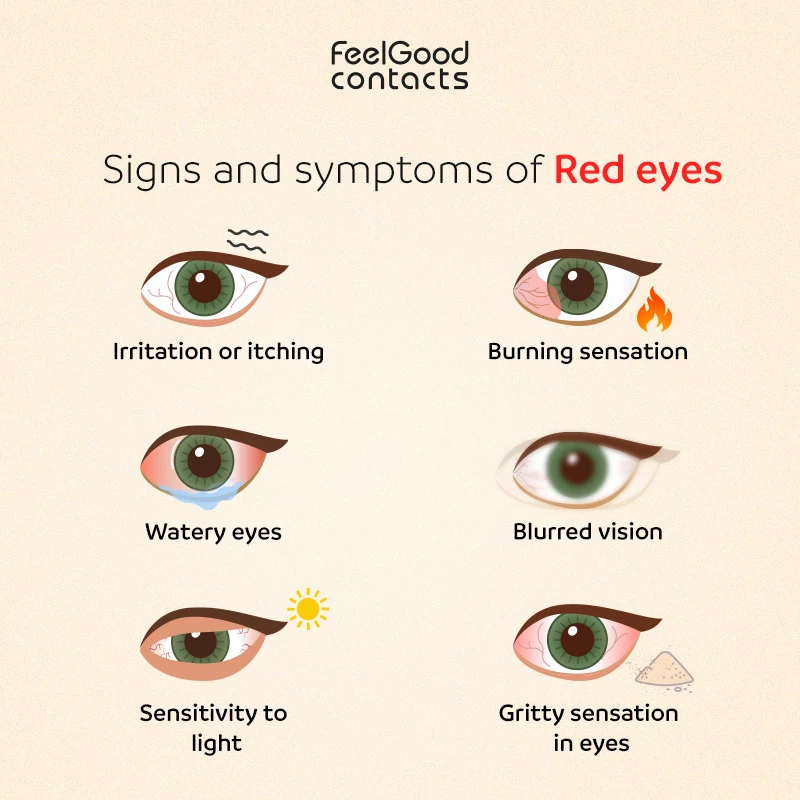
Eye redness may develop in one or both eyes and is associated with signs and symptoms, such as:
Prevention Tips
Making sure that your eyes are healthy and comfortable can be done by a few preventative tips, that include:
- If you wear contact lenses, practicing good lens hygiene is essential
- Use protective eyewear in dusty areas to shield your eyes
- Do not rub your eyes, especially with unwashed hands
- Stay hydrated and get enough sleep
- Follow the 20-20-20 rule (every 20 minutes look at something 20 feet away for 20 seconds)
- Get eye exams regularly
Even with preventive care, if the redness doesn't improve in a few days, you should visit your optician or healthcare provider for advice.
When to seek medical aid?
Most cases of red eye clear up quickly without treatment However, if you notice increasing redness, pain or sensitivity to light, it's important to see an eye specialist or healthcare provider right away.