Offers
 Account
 Menu
Menu Favorite
 Basket



 Need Optical Advice?









 Updated on:
16 April, 2026
Updated on:
16 April, 2026



 Copy Link


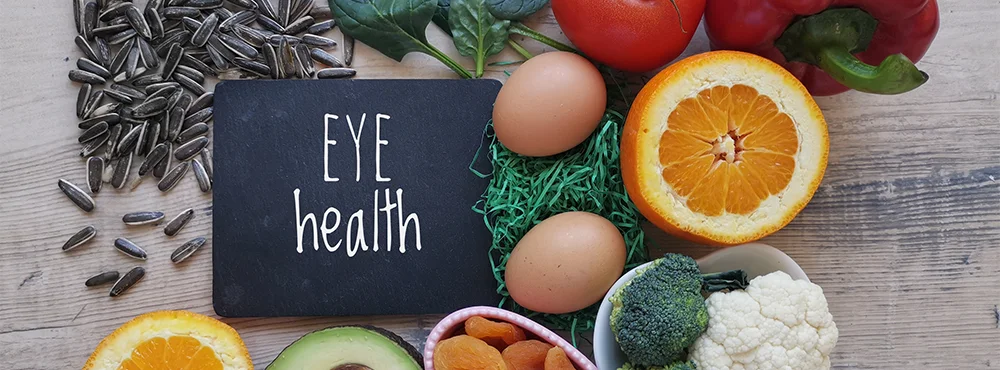
Healthy living and nutrition aren’t just limited to losing weight or keeping your blood sugar levels in check. Retaining your eye health and caring for your vision are also inseparable parts of your overall health. You may be getting regular eye checks, wearing the correct prescription, avoiding sun damage with 100% UV-protective sunglasses and wearing blue light glasses when using screens to help with digital strain, but that is not all your eyes need. As per experienced opticians, every individual (young or old) can consider adding certain eye vitamins and supplements to their everyday diet to preserve the quality of their vision and maintain your eye health.
The benefits of right food choices containing vitamins and eye supplements may seem less obvious but can go a long way in maintaining good eye health. With regular intake of supplements and vitamins to support eye health (as suggested by your optician or eye health provider), you can keep your eyes nourished and your vision retained for a long time to come, irrespective of how active your lifestyle is. Some findings suggests that this can also help prevent or mitigate several eye conditions and diseases like dry eyes and age-related macular degeneration.
Key eye vitamins and nutrients to include in your diet
All cells in our bodies undergo a natural process called oxidation where the cells use oxygen to break down nutrients into energy, whilst creating byproducts called free radicals. An imbalance between the free radicals and antioxidants in the body can lead to cell damage, called oxidative stress. Consumption of nutrient-rich antioxidants like Vitamins A, C and E can help in effectively removing these damaging oxidising agents from the body, improving eye health significantly. Following are the top-rated eye vitamins:
1. Vitamin A
When we talk about the most vital vitamins for eyes, Vitamin A or retinol tops the list as it impacts the quality of vision in low lighting conditions. Vitamin A is essential for photoreceptor function in the eyes. It is responsible for the pigments (rhodopsin) present in the retina (a layer of neural tissues at the back of the eye that serves as the human vision sensor by converting light into neural signals).
Animal products are the primary source of vitamin A; however, some plant nutrients can also be broken down into vitamin A. You can easily get vitamin A from food such as egg yolks, liver, fish oils, dairy, carrots, spinach and other dark leafy greens. Some fruits and vegetables that are orange and yellow in colour, such as mango, sweet potato and carrots contain beta-carotene, which can be converted into vitamin A by your body. Many people struggling with dry eyes use vitamin A eye drops as an effective treatment to minimise the symptoms.

2. Vitamin C
Vitamin C or ascorbic acid is widely known for its immune and skin benefits, but it is also one of the most valuable vitamins for eye health. It helps create and maintain connective tissues and collagen in the cornea (transparent, dome-shaped layer on the surface of the eye covering the iris and pupil). The human body cannot naturally produce vitamin C; hence it should be consumed. It is readily found in fruits and vegetables such as broccoli, peppers, kale and oranges.
3. Vitamin E
Vitamins A and C are single compounds, but vitamin E is a group of tocopherol and tocotrienol compounds that help protect essential fatty acids from oxidation, thereby improving eye health. Although vitamin E deficiency is rare, it can easily be obtained from food sources such as almonds, avocados and sunflower seeds.
4. Vitamin D and B12
Vitamin D and B12 essentially support the immune function, energy metabolism and bone and nerve health. Deficiency of these vitamins (along with other electrolytes and magnesium) can often cause dark circles and slower muscle function, leading to frequent involuntary eye twitches. This is why, eye twitching and vitamin deficiency are often interlinked. Regular exposure to sunlight and a diet that supports eye health such as eggs, beef, liver, fish, and dairy are effective for maintaining healthy eye function and reducing eye twitching and dark circles.
5. Carotenoids
Carotenoids are fat-soluble pigments found in several fruits and vegetables. They have tremendous anti-inflammatory properties that impact eye health. Lutein and zeaxanthin are two carotenoids commonly found in the macula (central part of the retina), providing protection from oxidative stress and helping slow down the progression of eye conditions like age-related macular degeneration. Some common food sources for carotenoids include spinach, kale, chard, raspberries and peaches.

Key eye supplements
It is essential to support eye health with food and exercise but there are certain groups of people who cannot eat specific nutrient-rich whole foods. They may have dietary restrictions, lead a vegan lifestyle or have limited access to a variety of food options. For such individuals, eye health dietary supplements can be an alternative to intake these key vitamins. Some of the highly recommended eye supplements are:
1. ICaps Tablets – A perfectly formulated multivitamin supplement with antioxidants and minerals for excellent ocular health. Shop here.
2. eyetamins Vision Support – It contains lutein, zeaxanthin, astaxanthin, zinc, copper and vitamins C, D and E for a nutrient-rich everyday dose. Shop here.
All eye supplements and vitamins must be taken as per your optician’s advice. Do not forget to read the list of ingredients for any potential allergens.
FAQs
Do eye vitamins really improve eyesight?
Eye vitamins do not improve eyesight, but some studies suggest that they can help slow the progression of certain eye diseases and conditions like age-related macular degeneration and dry eyes.
How long do eye supplements take to work?
The ideal time for eye supplements to show results can vary depending on a few factors like the type of eye supplement. However, it can take from up to several weeks to a few years of consistent daily use to show noticeable results.
Are eye supplements worth taking?
Eye supplements are valuable for people struggling to eat a balanced diet or for those who want to maintain good eye health and vision.