Offers
 Account
 Menu
Menu Favourite
 Basket



 Need Optical Advice?









 Updated on:
13 March, 2026
Updated on:
13 March, 2026



 Copy Link



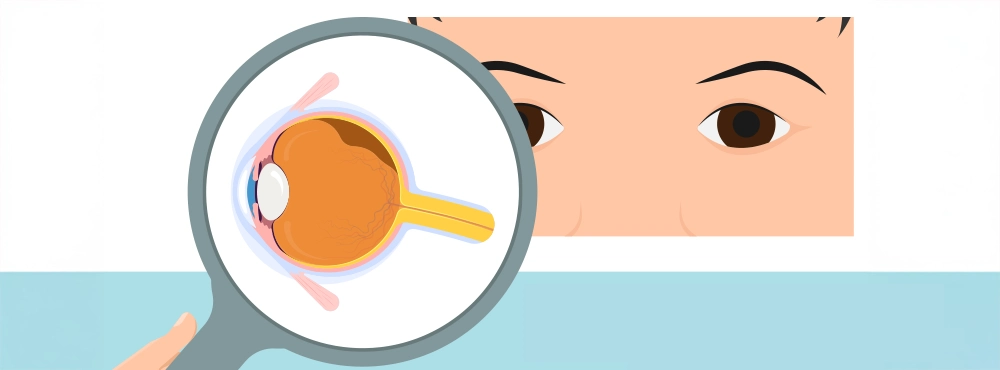
Posterior Vitreous Detachment or PVD is an age-related eye condition where the vitreous, a gel-like substance inside the eye, separates from the retina. The vitreous fills about 80% of the eye and helps maintain its shape while allowing light to pass to the retina, which is responsible for processing visual information.
Causes of posterior vitreous detachment
The vitreous is composed of water, protein, collagen and hyaluronic acid. As we age, the vitreous undergoes changes, becoming more liquefied and less gel-like. This natural process can eventually lead to the vitreous pulling away from the retina, resulting in PVD.
Several factors can contribute to the development of PVD. While ageing is the most common cause, there are other factors:
Ageing
One of the primary causes of posterior vitreous detachment is the natural aging process. As we age, the vitreous gel gradually shrinks and becomes less gel-like. This change can lead to detachment, a common phenomenon among individuals over 50.
Gender
Females are more susceptible to PVD. Hormonal changes, primarily during menopause, can accelerate the changes in the vitreous gel, increasing the risk of detachment among women.
Myopia
People with myopia (nearsightedness) are more likely to experience PVD. The elongated shape of their eyes can cause the vitreous gel to detach more easily than in those with normal vision.
Eye injury
Physical trauma to the eye can cause the vitreous gel to separate from the retina.
Ocular surgery
Eye surgeries such as cataract extraction, intraocular lens placement and LASIK (Laser in situ keratomileusis) can disturb the vitreous gel, leading to PVD. It's crucial for patients undergoing ocular surgery to discuss potential risks with their ophthalmologist.
Underlying diseases
Certain diseases, like retinitis pigmentosa and Stickler syndrome, are linked to PVD. These conditions affect the eye's internal structure and can lead to vitreous detachment.
Retinal laser and cryotherapy
Procedures such as retinal laser and cryotherapy can inadvertently cause PVD due to their impact on the eye's internal structures.
Posterior Vitreous Detachment can happen in both eyes, but it usually occurs in one eye at a time. Most people develop it in the other eye within six months to a couple of years.
Posterior Vitreous Detachment can happen in both eyes, but it usually occurs in one eye at a time. Most people develop it in the other eye within six months to a couple of years.
Symptoms of posterior vitreous detachment
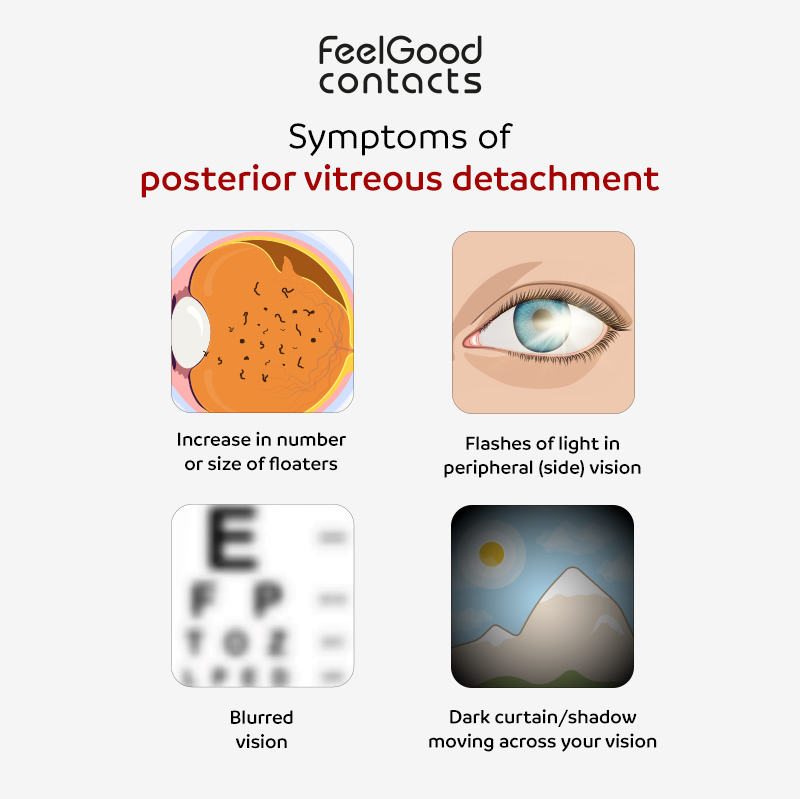
Most people with PVD experience changes in their vision. However, the symptoms of a PVD can also be a sign that the retina has detached and requires urgent medical attention. It is not possible necessarily to distinguish the symptoms of a retinal detachment from a posterior vitreous detachment and any new PVD symptom should be checked by an eye physician promptly (< 24 hours). Here are some common symptoms:
Floaters
Floaters are small, moving spots that seem to float in your field of vision. They can look like tiny specks, strings or cobwebs. Although they are usually harmless, a sudden increase in their numbers or size could be a symptom of PVD.
Flashes of light
Sometimes, PVD can cause flashes of light in your vision. These flashes occur when the vitreous pulls on the retina. It’s similar to seeing stars after rubbing your eyes.
Blurred vision
Some people may also experience blurred vision as the vitreous detaches. This is often temporary and reduces as the eye adjusts.
A dark curtain over your vision
Seeing a dark curtain or shadow moving up, down or across your vision is a symptom of PVD.
Diagnosis of posterior vitreous detachment
Posterior vitreous detachment diagnosis involves a comprehensive eye examination by an ophthalmologist. They may perform a dilated eye exam to inspect the retina and vitreous gel. Optical coherence tomography (OCT) or ultrasound imaging can also be used to assess the condition of the vitreous and retina.
Treatment for PVD
In most cases, PVD doesn't require treatment as the symptoms tend to resolve over time. However, if the detachment leads to complications such as retinal tears, further intervention may be necessary. The most common treatments include:
Surgery
In rare instances where PVD causes significant problems, such as retinal detachment, surgical intervention may be required. Vitrectomy is a procedure used to remove the vitreous gel and repair the retina.
Laser treatment
Laser treatment can be recommended if PVD causes a retinal tear. The laser helps seal the tear and reduces the risk of it progressing to retinal detachment. This treatment is usually quick and helps prevent further damage.
When to see an optometrist?
If you experience sudden or persistent symptoms of posterior vitreous detachment, like an increase in floaters, flashes of light or a shadow in your vision, seek immediate medical attention. These could be signs of a retinal tear, which requires urgent treatment.
Difference between degenerative vitreous syndrome and PVD
While PVD and Degenerative Vitreous Syndrome (DVS) may seem similar as they both involve changes in vitreous gel, they are different. PVD is the natural separation of the vitreous from the retina, whereas DVS is a condition where the vitreous gel becomes liquefied and degenerates without necessarily detaching.
Tips to maintain your eye health
Maintaining overall eye health is key to managing PVD and preventing additional eye problems. Here are some tips for the same:
- Regular eye exams: Visit your eye specialist regularly to monitor your eye health.
- Healthy diet: Consume foods rich in vitamins C and E, lutein and omega-3 fatty acids, all of which support eye health.
- Protect your eyes: Wear sunglasses to protect against UV light and safety glasses during activities that could potentially injure your eyes.
Frequently Asked Questions
Does posterior vitreous detachment (PVD) lead to vision loss?
Posterior vitreous detachment does not cause permanent loss of vision. However, any sudden increase in floaters or flashes should be checked by an optometrist.
Can I do anything at home to reduce floaters and flashes?
There is no treatment at home to stop floaters and flashing lights. In most cases, they become less noticeable over time.
How serious is posterior vitreous detachment?
PVD is usually a normal change that happens with age and is not serious. Regular eye examinations are important to prevent any related retinal problems.
What triggers vitreous detachment?
Vitreous detachment is mainly caused by age-related changes in the eye. It may also occur earlier in people who are short-sighted or have had eye injury or surgery.
What’s the difference between retinal detachment vs PVD?
PVD happens when the vitreous gel pulls away from the back of the eye and is usually not serious. Retinal detachment is when the retina itself separates from the eye and needs urgent medical treatment.