Pinguecula: Causes, Symptoms, Treatment & Prevention

Medically reviewed by Tina Patel, Contact Lens Optician at Feel Good Contacts.

Have you ever noticed a small bump on the white of your eye and worried if it is going to hamper your vision in the long run? You may be experiencing pinguecula, a common eye condition that is usually harmless and typically doesn’t affect vision. If you are wondering how a pinguecula develops, what leads to it, or when to seek medical advice, this article will walk you through it all. Read on to know more.

What is Pinguecula?

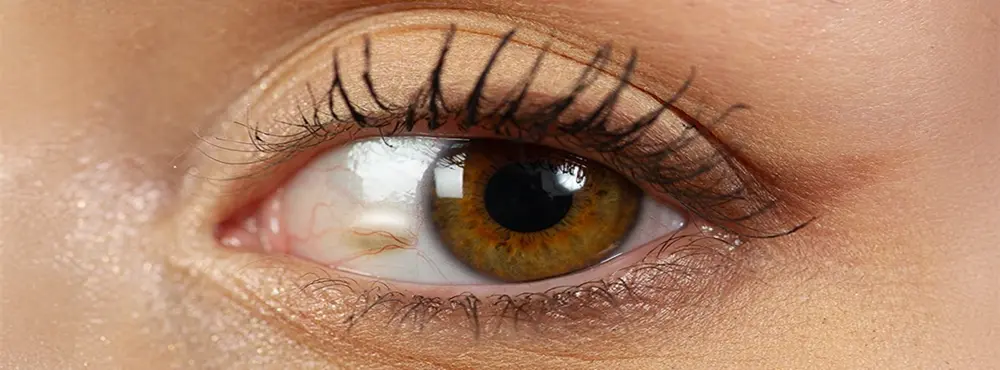
Pinguecula (ping-GWEH-kyuh-luh) is a common type of off white to yellowish coloured bump that develops on the conjunctiva (the clear tissue covering the white of the eye), near the edge of the cornea (transparent front part of the eye). This growth forms when the conjunctiva thickens, forming a slightly raised, round or triangular-shaped bump. A pinguecula may start as a small, yellow spot on your eye and gradually grow into a lump, which can take months or even years to develop. It can occur in one or both eyes.

Pinguecula vs. pterygium

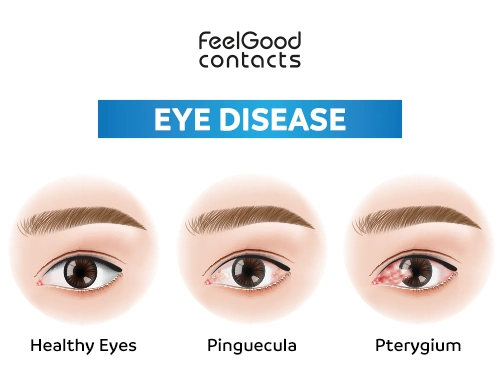
Pterygium is often confused with pinguecula as both the eye conditions are very similar in appearance and occur on the conjunctiva. A pinguecula is a small yellowish bump caused by degenerative changes in the conjunctiva, whereas pterygium (commonly called surfer’s eye) is a wing-shaped fibrous or vascular growth that can reach the cornea and can potentially affect your vision.

pinguecula vs pterygium

Pinguecula symptoms and signs

Apart from the appearance of a light-coloured bump on white of eye, pinguecula usually have no other symptoms. However, in some cases it can become inflamed (a condition known as pingueculitis), leading to redness, irritation and severe dry eyes. The raised bump can also interfere with the tear film, disrupting the normal flow of tears across the eye.

Pinguecula causes

Pinguecula is more common with increasing age but can develop at any stage of life. Exposure to UV radiation and other environmental factors (like dust, wind and sand) is the biggest cause of pinguecula. People who spend considerable time outdoors are more likely to develop pinguecula, often in both eyes.

Pinguecula treatment

In most cases, no specific pinguecula treatment or removal is required. However, your eye care professional may prescribe you some tips to relieve the symptoms, such as:

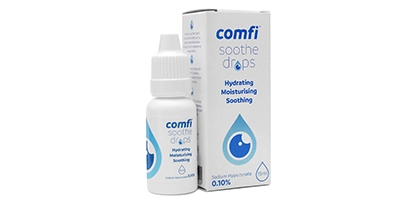
using lubricating eye drops

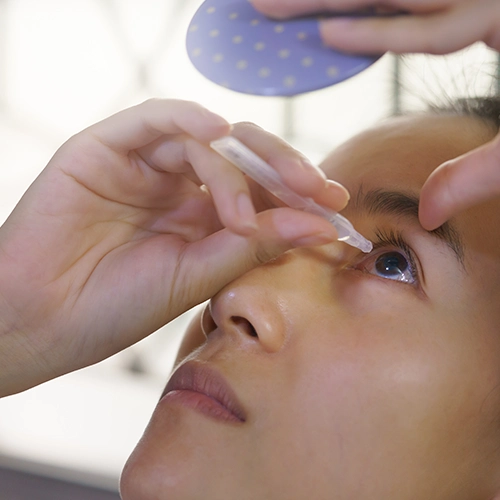
Using lubricating eye drops

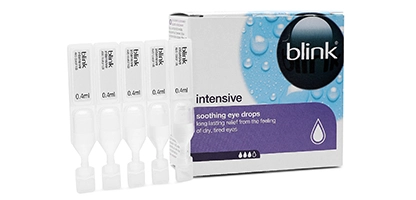
If your pinguecula results in a dry eye syndrome or a gritty sensation, regular use of lubricating eye drops may help significantly.

Our range of optician-recommended dry eye treatments is here to relieve dry eyes and soothe irritated eyes.

wearing uv protective sunglasses

Wearing UV-protective sunglasses

To help reduce or slow down progression caused by exposure to UV light, it’s best to wear UV-protective sunglasses. This matters even if you wear contact lenses, since lenses only protect the cornea and not the surrounding eye surface. Sunglasses provide the full coverage needed to shield the entire area from UV damage.

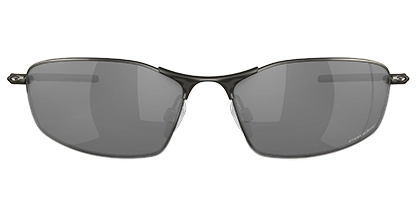
Ensure superior sun protection with the curved frame designs of our collection of wraparound sunglasses.

Oakley Whisker OO4141-01 Carbon Prizm Black

Shop Oakley Whisker OO4141-01 Carbon Prizm Black 60 Polarised Sunglasses

Shop Now

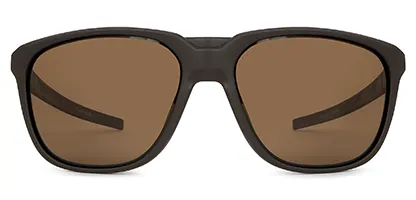
Feel Good Collection Alek 11 Matte Brown 57 Polarised

Shop Feel Good Collection Alek 11 Matte Brown 57 Polarised Sunglasses

Shop Now

If the pinguecula becomes increasingly inflamed or uncomfortable, surgical removal may be considered. In such cases, it is advised that you consult your eye care professional promptly to discuss appropriate management options.

FAQs

Is a pinguecula serious?

Pinguecula is typically harmless. It does not affect vision and often does not require any treatment.

Can it cause blindness?

Simply put, a pinguecula is a small benign bump on the white part of the eye. As it is located on the surface and away from the structures responsible for vision, it cannot cause blindness or affect how you see.

What should I do for pinguecula prevention?

As environmental factors play a major role in causing this eye condition, wearing UV-protective sunglasses is one of the biggest pinguecula prevention tips.

Disclaimer: The advice in this article is for informational purposes only and does not replace medical care or an in-person check-up. Please check with an eyecare professional before purchasing any products or remedies. For information on our article review process, please refer to our Editorial Policy.

live chat

10% OFF

FIRST ORDER

Privacy Policy.

Thank You!