Offers
 Account
 Menu
Menu Favourite
 Basket



 Need Optical Advice?









 Updated on:
10 March, 2026
Updated on:
10 March, 2026



 Copy Link



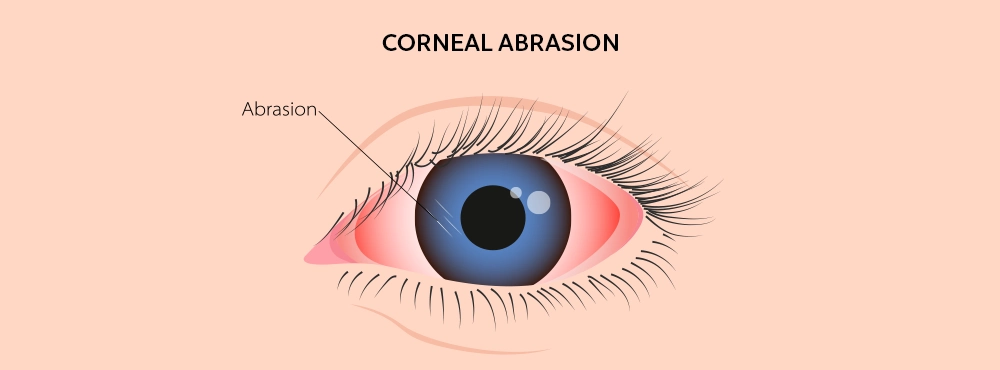
A corneal abrasion is one of the most common eye injuries, where the cornea experiences a surface-level scratch caused by an injury to the eye. When such a condition happens, you may get the sensation that something is stuck in your eye, or your eye may feel watery and painful. Read on to find out what causes a scratched eye and available treatments for the same.
- What does corneal abrasion mean?
- What causes corneal abrasion?
- What are the symptoms of a cornmeal abrasion?
- Treatment for scratched eye
- How long does a corneal abrasion take to heal?
- Corneal abrasion prevention and care
- What can worsen a corneal abrasion?
- Frequently asked questions
What does corneal abrasion mean?
The cornea is the transparent, dome-shaped outer layer of the eye. When a scratch caused by direct trauma happens to this layer, it is called a corneal abrasion.
What causes corneal abrasion?
The causes of a corneal abrasion can vary from tiny airborne particles of metal, wood or dust to cosmetic tools such as makeup brushes, fake eyelashes and even contact lens wear. Any of these elements can lead to a scratch to the cornea, known as corneal abrasion.
What are the symptoms of a cornmeal abrasion?
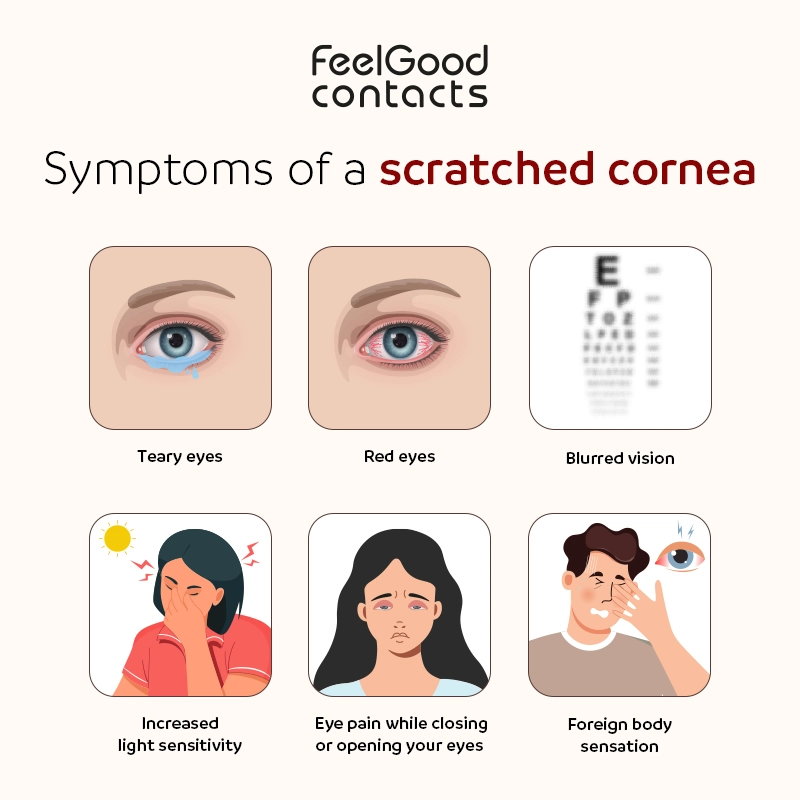
Some of the most common symptoms include:
- Teary eyes
- Red eyes
- Blurred vision or decreased vision
- Increased light sensitivity
- Eye pain while closing or opening your eyes
- Foreign body sensation
Treatment for scratched eye
Most corneal abrasions are self-resolving after a few days. However, the first step would be to visit your optician, a dye would be applied to stain and assess the front surface of the eye. Some abrasions may cause the cornea to be more prone to infection; in this case, antibiotic eye drops would be advised. Alongside this, lubricating eye drops may be advised to keep the eye moist and prevent the eyelid from sticking to the cornea, during the night. The optician would review the healing process, usually within 24-48 hours.
Any changes in vision, severe pain and symptoms that get worse, would require a visit to A&E or hospital eye services. An eye pad or a bandage contact lens may be used to prevent making the abrasion worse and allow the cornea to heal. In rare cases, a procedure called superficial keratectomy can be undertaken – if the abrasion is severe, non-healing and results in deep scars. During the course of treatment, it is advised to discontinue contact lens wear until the cornea has fully healed.
How long does a corneal abrasion take to heal?
If the scratch does not heal naturally, it can lead to complications, such as corneal ulcers, keratitis and iritis. In some cases, another complication of a corneal abrasion is corneal erosion syndrome. In this condition, the injury reopens over time, and you can feel recurring eye pain and blurry vision caused by the damage that occurred in your cornea. If the pain persists and you experience discomfort, consult your optician immediately.
Corneal abrasion prevention and care
You can prevent corneal abrasion by using protective eyewear and by handling your contact lenses carefully and as advised. Here’s how you can prevent the possibility of an eye injury causing corneal abrasion:
Use protective eyewear when you are:
- Doing household chores like gardening, cleaning or cooking
- Working in a chemical factory or at a construction site
- Playing sports such as basketball, football, cricket or hockey
If you wear contact lenses, you can lower the risk by:
- Not wearing your lenses longer than the recommended period
- Not wearing them when your eyes feel dry
- Follow strict contact lens hygiene - Disinfecting before and after wearing
- Handle contact lenses with care – Not using too much pressure and without using fingernails during insertion & removal
What can worsen a corneal abrasion?
When a corneal abrasion occurs, it’s natural to feel the urge to rub your eye. Doing so can deepen the scratch, making the condition worse. Additionally, using certain drops to reduce redness and ignoring vision changes, sensitivity to light or other symptoms can also elevate the eye condition.
If you’ve come across a time when you feel there’s something in your eye, you shouldn’t ignore it, as it can be a corneal abrasion. Visit your optician to seek clinical assessment.
Frequently asked questions
Is corneal abrasion a serious condition?
No, this condition isn’t serious. However, if the symptoms lead to eye pain or vision changes, you should consult a professional for clinical assessment.
Should I visit A&E for a corneal abrasion?
Unless you are having severe symptoms, you should consult an optician rather than visiting A&E.
Can I treat a child with corneal abrasion at home?
No, it is not recommended. Even if the abrasion is minor, you should always get your child’s eye checked by an optician.
How can I stop my scratched eyes from becoming worse?
- Do not rub your eyes, as this can damage the cornea and deepen the scar.
- Do not try to retrieve the object or any foreign element that’s stuck in your eye. Removal should be done by an eyecare professional.
- Avoid wearing contact lenses until your abrasion is completely gone.
- Do not touch your eye using any objects, such as tweezers or cotton swabs.