Offers
 Account
 Menu
Menu Favourite
 Basket



 Need Optical Advice?













The role of eye shape in eyewear selection
Prescription glasses are not just used for vision correction but also for making impactful style statements. Not only does the right pair balance your features by adding structure or softness where needed, but it also highlights your eyes and complements your eye shape.
Common eye shapes and glasses that best match them
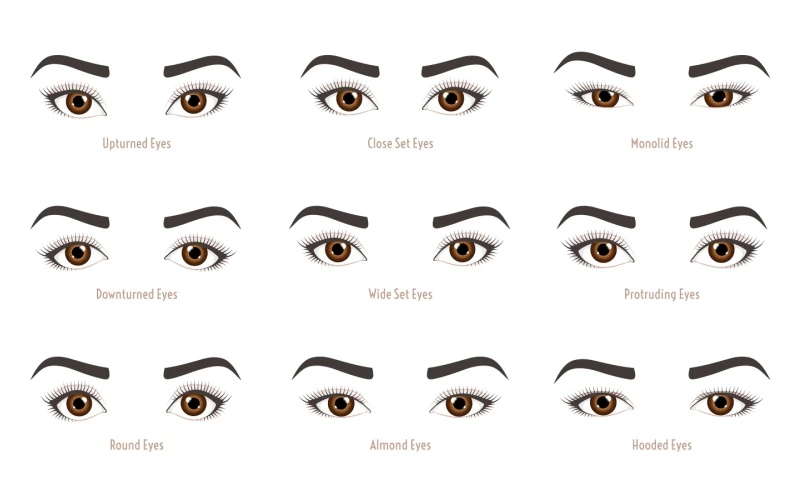
Now that we understand the significance of eye shape in choosing the best frames, let’s break down the various eye shapes and how to enhance them with the right frame shapes.
1. Almond eyes
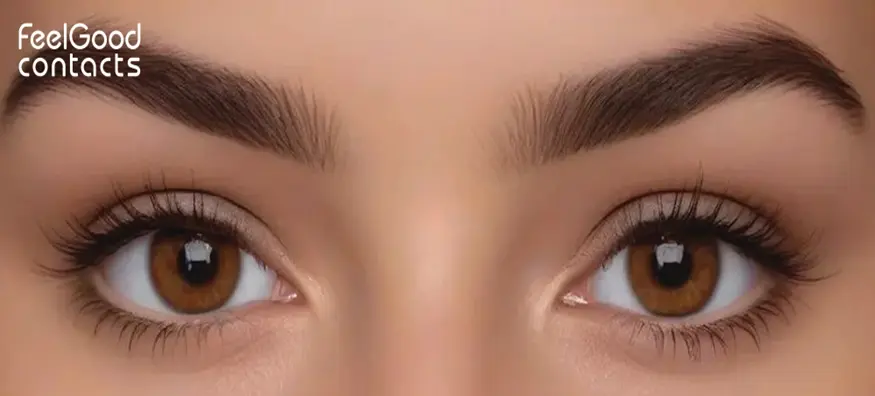
Almond-shaped eyes are slightly pointed at the ends with a balanced proportion. Thin metal frames and cat eye, oval or round frames best complement almond eyes as they follow the natural contour of your eyes and enhance their symmetry.
2. Round eyes
Round eyes appear larger and more open, with a noticeable circular shape. Angular or geometric frames are known to add definition and contrast to the softness of round eyes, creating balance. So, people with round-shaped eyes should go for cat eye, rectangular, square or clubmaster frames.
3. Hooded eyes
Hooded eyes have a fold of skin that partially covers the eyelid. The best frame shapes to flatter this eye shape should help enlarge the eye area and prevent the eyes from looking smaller. So, people with hooded eyes look best in oversized frames of any shape and should avoid small frames.
4. Monolid eyes
Monolid eyes lack a visible crease and have a smooth eyelid surface. To add dimension and create visual depth, people with monolid eyes should go for thick-rimmed glasses that don’t sit over the eyebrows, bold frames, or eyewear with colourful or patterned designs.
5. Deep-set eyes
Deep-set eyes sit slightly further back in the eye socket, creating a shadowed look. To create the illusion of bringing the eyes forward and brightening the face, the best type of glasses would be light-coloured or minimal, thin metal frames. Transparent or rimless styles also look good on people with deep-set eyes.
6. Wide-set eyes
Wide-set eyes have more space between them than average, where the inner corners of each eye are larger than the width of one eye. To draw attention inward and balance the spacing, it’s best to choose prescription frames with prominent looking bridges, bold central detailing near the nose. Colourful or aviator frames would be a great choice for people with wide-set eyes.
7. Close-set eyes
Opposite to the wide-set eyes, close-set eyes are positioned closer together. Wider, angular frames, or eyewear with minimal detailing at the centre or light or transparent bridges work best for people with such eyes, creating the illusion of more space between the eyes.
8. Upturned eyes
This eye shape is based on the tilt of the eyes, where the outer corners of the eye are lifted in an upward angle. Soft curved frames such as oval shape can be best suited to provide contrast to the eye tilt. Cat eye shapes tend to mimic the lifted outer corners, offering a complementary look.
9. Downturned eyes
This eye shape is also based on the tilt of the eyes, where the outer corners of the eye are turned in a downward angle. Cat eye, upswept style or frames that are top-heavy such as clubmasters can create contrast from the natural downward eye tilt. You can also consider half-rimmed or rimless frames as these will deter attention to the outer corners of the eyes.
10. Protruding eyes
This eye shape is often round and large, where the eyes sit more forward towards the face. There is a condition that is associated with this eye shape, known as exophthalmos, which causes bulging eyes. The appearance of this eye shape is more expressive than other eye shapes. Recommended frame shapes to create balance include large square, geometric or rectangular, whilst avoiding small or thin metal frames.
Can eye shape influence your vision?
People often associate eye shape with different vision issues. The anatomy of your face determines your eye shape based on genetic factors that influence the bone structure and fat distribution around your eyes. This affects the aesthetics of your face, but not your vision. However, the length and shape of your eyeball can cause refractive errors, such as myopia and hyperopia.
Astigmatism is also not about how your eyes look externally. It is a refractive error caused by an irregular curvature of the cornea or lens, which is effectively corrected by specially designed prescription lenses. Similarly, autism does not define a specific eye shape. However, there are some studies to suggest otherwise. Certain genetic conditions associated with autism may involve facial differences, but these are not its defining traits.
Whether you have almond, round, hooded or deep-set eyes, there’s always a frame that doesn’t just help you see better, but also enhances your look. At Feel Good Contacts, we offer a wide selection of prescription glasses frames from popular eyewear brands, ensuring you never run out of choices. If you really like a frame that doesn’t match up to your eye shape as per our style guide, you must go ahead and try it on. You can see how it looks on you with our virtual try-on tool and make a more confident, informed eyewear choice.
FAQs
Can eye shape change naturally?
Your eye shape generally remains the same, but factors such as ageing, lifestyle and skin elasticity can subtly alter how your eyes appear over time.
Is astigmatism related to eye shape?
No, astigmatism is caused by irregular curvature of your eyeballs, not by its external shape.
Are certain eye shapes more common?
Yes, almond-shaped eyes are often considered the most common, while hooded or monolid eyes vary across ethnicities.
How can I enhance my natural eye shape?
To enhance your eye shape and create the most flattering effect, choose eyewear that complements your natural features.